Pioneer in Offering CRM Solutions since 2010...
Pioneer in Offering CRM Solutions since 2010...
 ChatGPT Development
 Claude AI Development
 Gemini AI Development
 Microsoft Copilot Development
 DeepSeek AI Development
 LangChain Development
 CrewAI Development
 AutoGen Development
 LangGraph Development
 Pinecone Development
 Weaviate Development
 AI Workflow Automation
 Qdrant Development
 Cursor AI Consulting
 GitHub Copilot Consulting
 Enterprise AI Search
ChatGPT Development
Claude AI Development
Gemini AI Development
Microsoft Copilot Development
DeepSeek AI Development
LangChain Development
CrewAI Development
AutoGen Development
LangGraph Development
Pinecone Development
Weaviate Development
AI Workflow Automation
Qdrant Development
Cursor AI Consulting
GitHub Copilot Consulting
Enterprise AI Search
How AI-assisted engineering, automated testing and development automation supported the development of four connected business portals
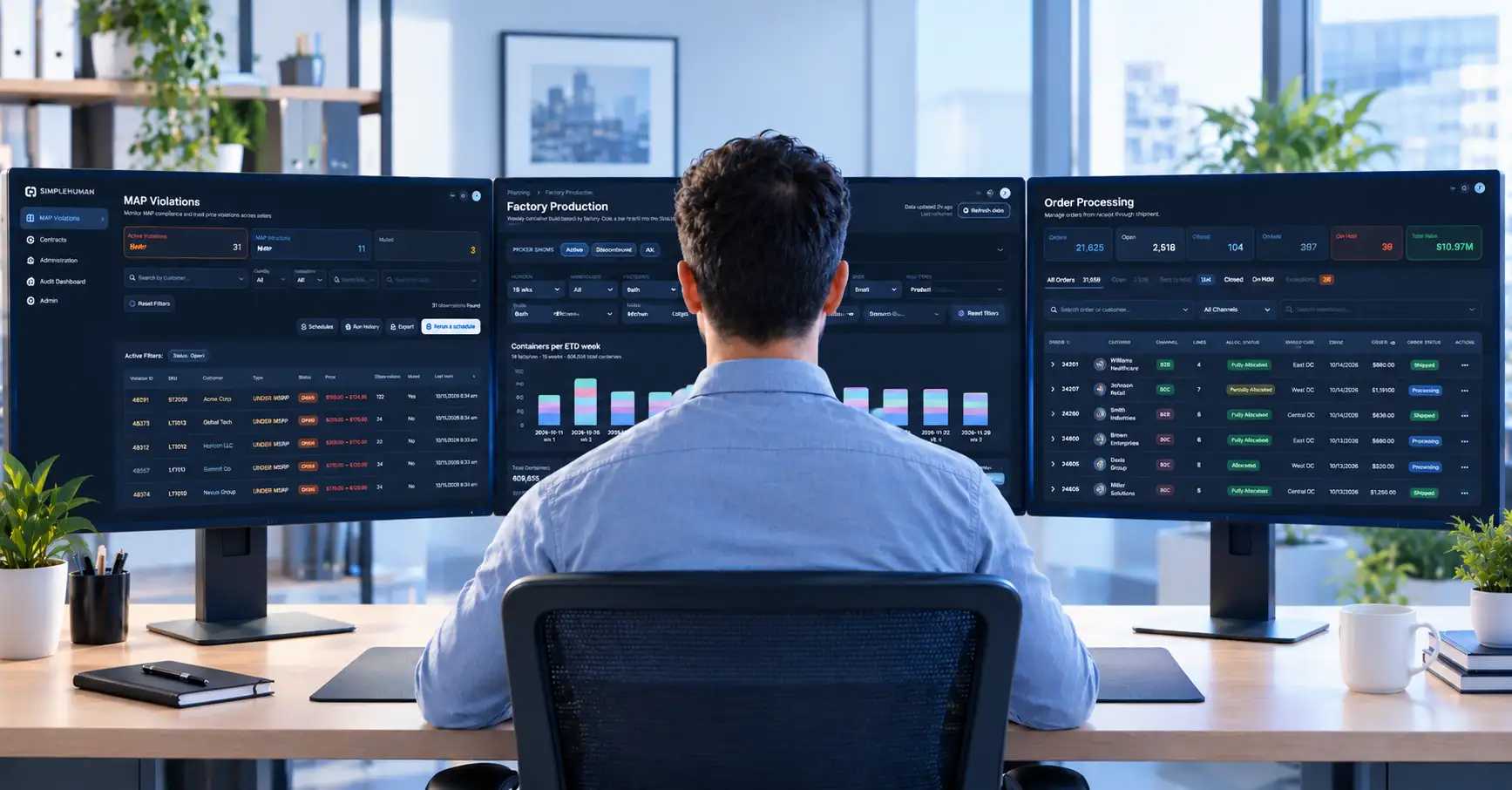
A manufacturing company needed a modern enterprise platform connecting order management, sales, planning and supplier collaboration.
The project evolved into four connected portals:
Order Management System
Sales & Pricing Visibility
Demand & Supply Planning
Factory & Supplier Collaboration
The development team combined conventional software engineering with AI-assisted development and automation.
The result was a development approach where AI helped reduce repetitive engineering work while developers remained responsible for architecture, business rules, security, validation and production decisions.
The company operated across several connected business functions:
These activities depended on different systems, data sources and operational workflows.
The solution consists of four connected enterprise portals.


Manages customer orders, order processing, order changes, allocations and operational workflows.
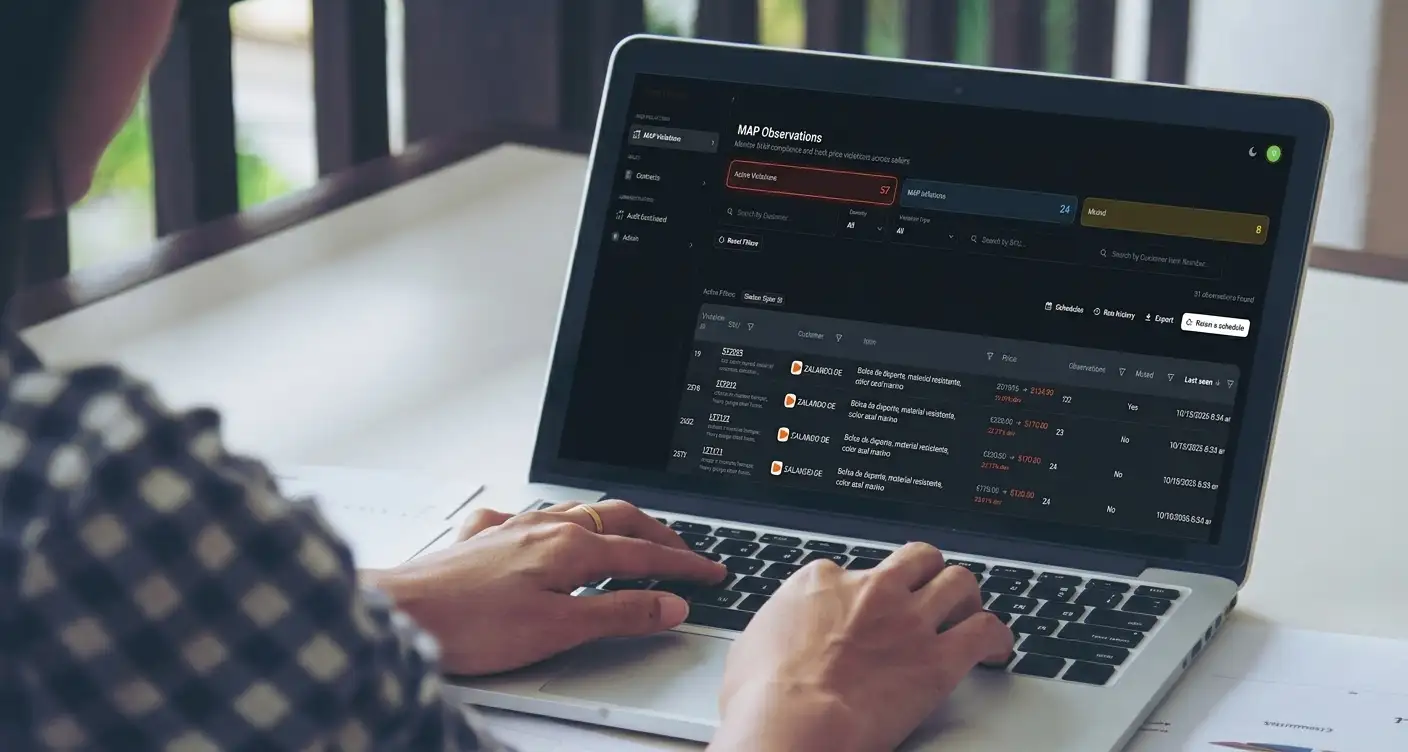
Provides sales visibility, pricing information, MAP monitoring and sales-event processing.
Supports demand and supply planning, supply exceptions, simulations, factory planning and purchase-order workflows.
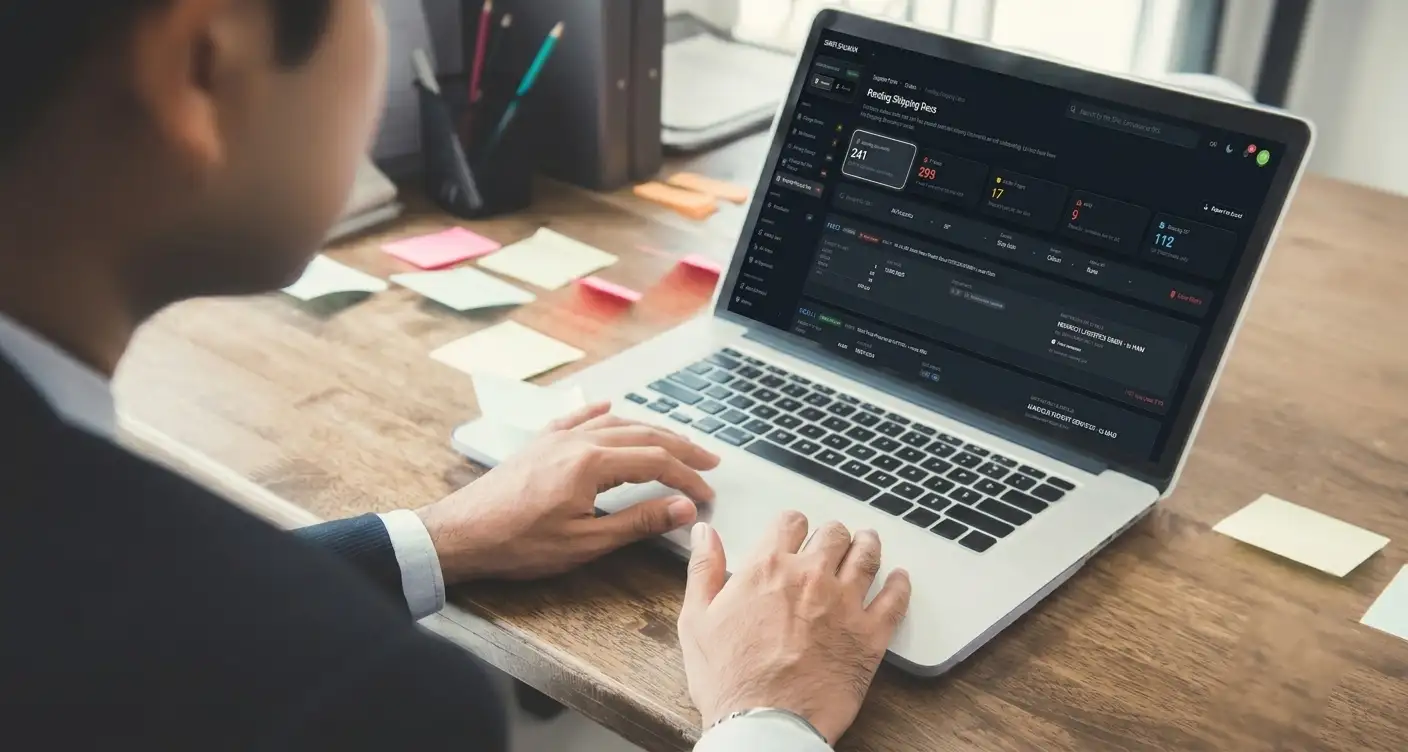
Allows factories and suppliers to work with purchase orders, acknowledgements, change requests and shipping documents.
Although each portal serves a different business function, they share common enterprise capabilities including:
The objective was not to replace developers with AI.
The objective was to reduce repetitive engineering effort and allow developers to spend more time on:
AI became part of the development workflow as an engineering assistant.
It helped developers move faster from:
Human engineers remained responsible for the final implementation and business decisions.
Break requirements into smaller technical tasks and identify edge cases.
Confirm business intent and scope.
Explore APIs, data structures and implementation approaches.
Select architecture and implementation strategy.
Generate first drafts of repetitive code, models, queries and service logic.
Review, modify, integrate and approve code.
Generate and explain queries and investigate data patterns.
Validate queries against actual business data.
Explain errors and suggest possible causes and fixes.
Confirm root cause and validate solution.
Generate positive, negative and edge-case scenarios.
Validate actual business behaviour.
Prepare first drafts of technical documentation.
Verify accuracy and finalize documentation.
Assist with release checklists and preparation.
Approve production changes.
Some OMS operations could take longer than a normal API request.
The platform therefore uses asynchronous processing through Azure Service Bus.
Correlation IDs and sessions associate requests and responses.
AI-assisted engineering helped developers:
The final architecture and production implementation remained under developer control.
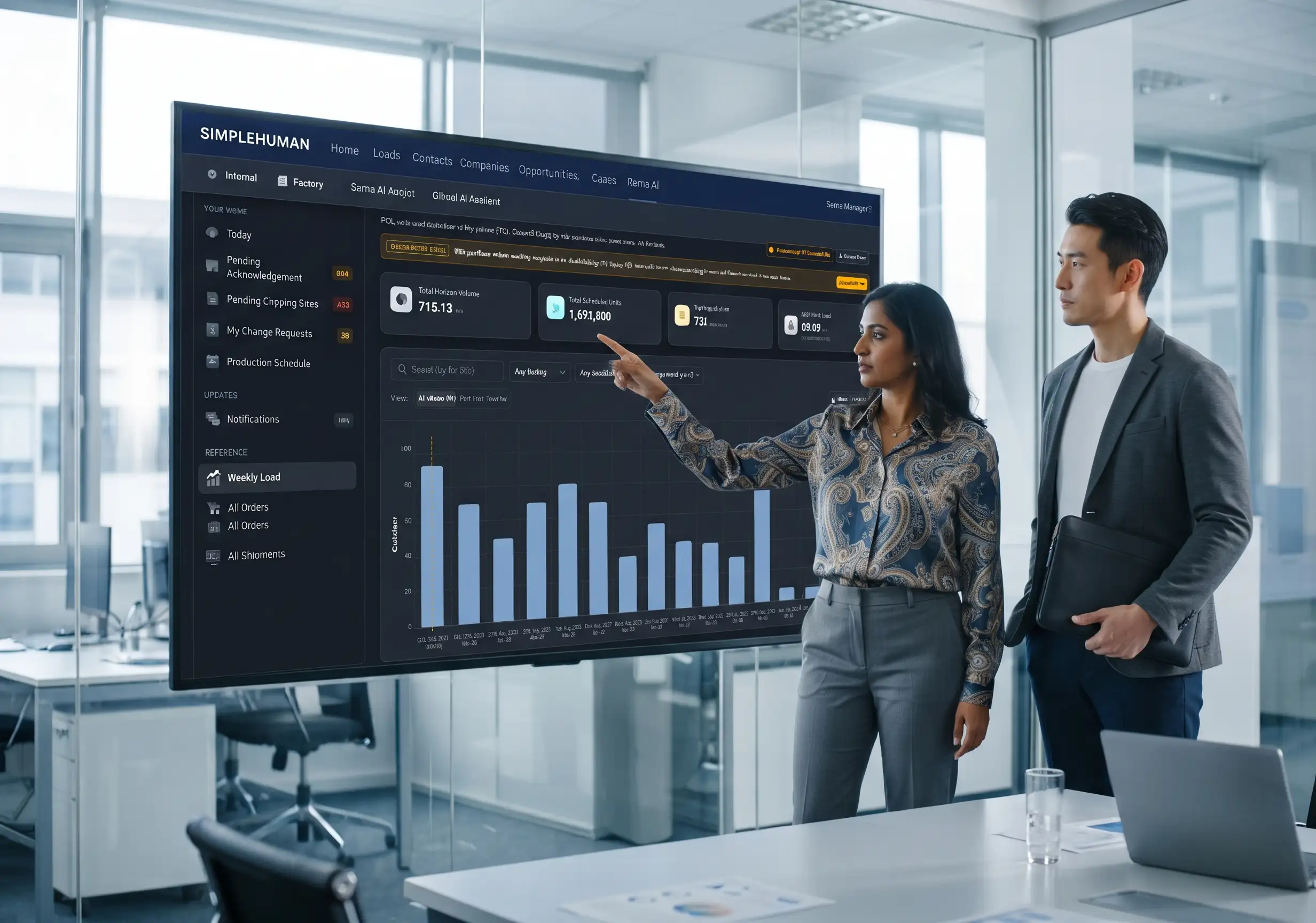
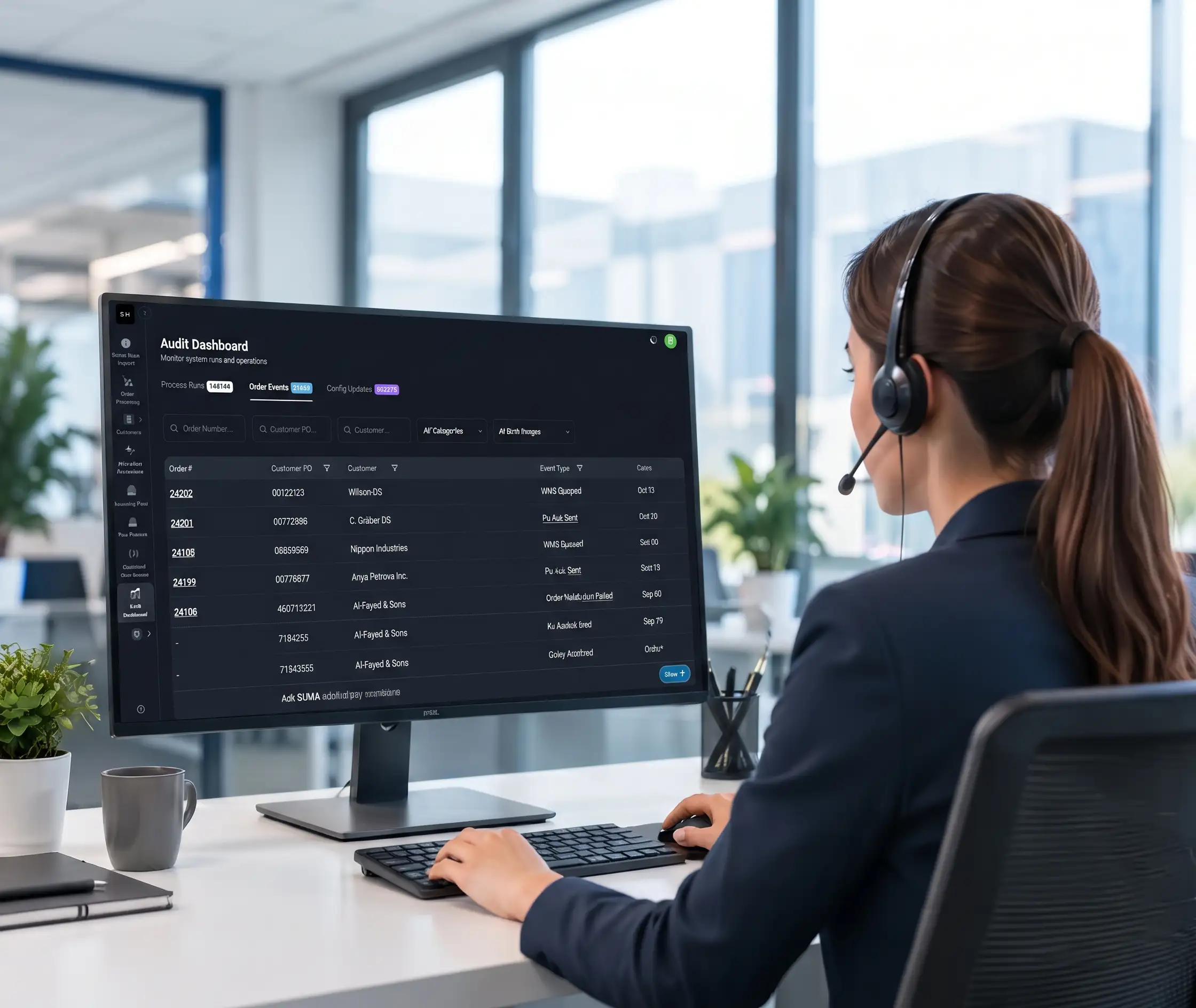
The OMS Audit Dashboard can contain millions of records.
This created challenges around:
The team used database optimization and caching to improve performance.
AI could assist developers by:
The final architecture and production implementation remained under developer control.
Planning and Supplier data could appear different because of:
AI-assisted analysis helped developers investigate:
The final reconciliation logic was validated against actual business data before implementation.
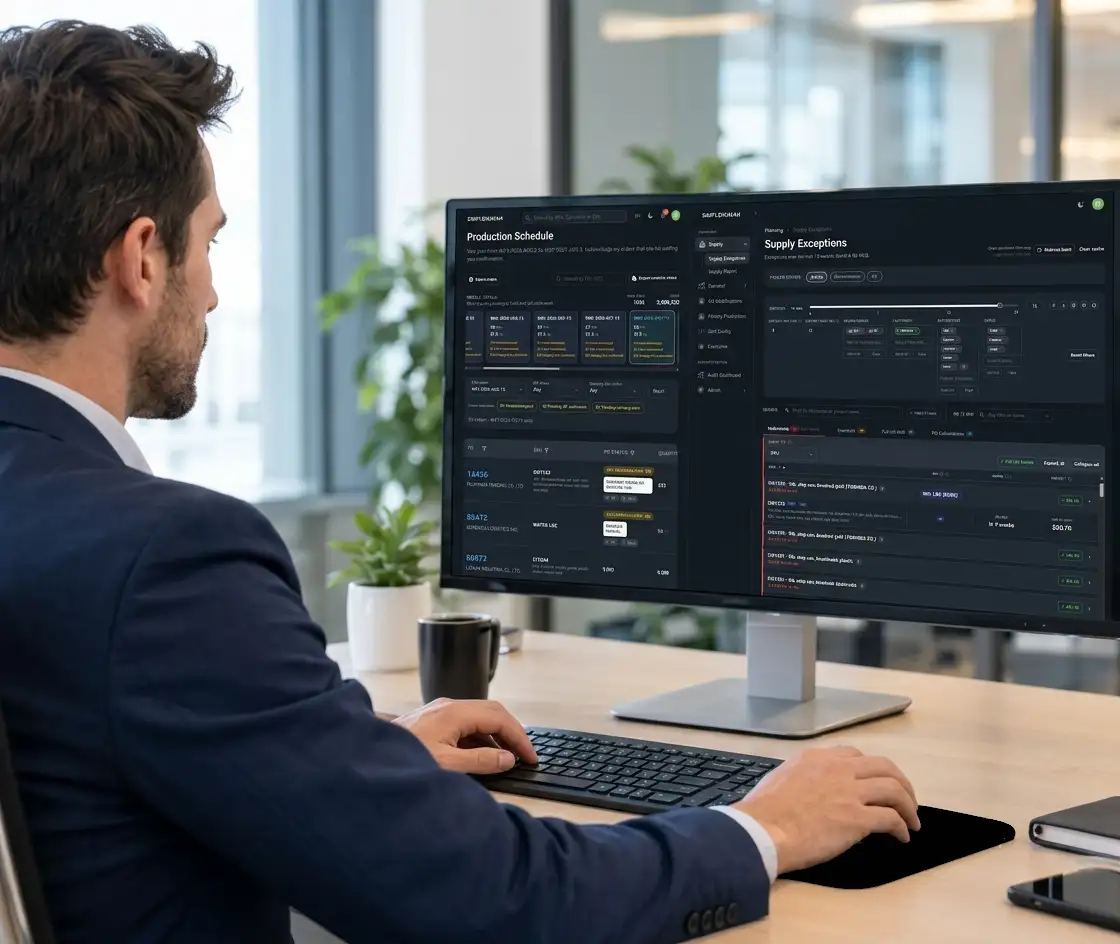
AI was particularly useful for expanding the number of scenarios considered during development.
Instead of testing only the successful workflow, developers could use AI to identify:
Successful ERP response, delayed response, timeout, failure response, duplicate message.
Valid acknowledgement, duplicate acknowledgement, invalid PO, unauthorized supplier.
Missing information, duplicate request, rejection, resubmission, invalid quantity.
Correct role, missing permission, wrong portal, unauthorized factory access.
Matching records, renamed vendor, duplicate PO, regional record, delayed synchronization.
AI and automation played different but complementary roles.
The project material does not identify specific AI product names, so the case study should describe the capabilities rather than inventing vendor/tool names.
Generate starting points for repetitive code, models and service logic.
Requirement analysis, technical investigation, debugging and documentation.
Generate, explain and review database queries.
Generate functional, negative and edge-case scenarios.
Explore patterns, mismatches and reconciliation approaches.
Create first drafts of technical and API documentation.
The primary benefit of AI was the reduction of repetitive engineering effort.
Developers could spend less time starting routine work from scratch and more time reviewing, validating and solving business-specific problems.
A specific 30% development-cost reduction should not be presented as a measured Simplehuman project result unless supporting project records are available.
The correct way to establish such a claim is to compare equivalent development work before and after AI adoption, including:
AI assistance was particularly valuable because the project contained multiple complex business domains.
The platform connects multiple parts of the business rather than treating them as isolated applications.
The overall platform can be represented as:

The project used AI as an assistant, not as the final decision-maker.
| Layer | Technology |
|---|---|
| Frontend |
React
19
Next.js
16
Material
UI 8
|
| Backend |
FastAPI
Python
SQLAlchemy
Alembic
|
| Database |
PostgreSQL
|
| Enterprise Data |
Microsoft
SQL Server / ERP
|
| Messaging |
Azure
Service Bus
|
| Caching |
Redis
|
| Layer | Technology |
|---|---|
| Identity |
Microsoft
Entra ID / Azure AD SSO
|
| Authorization |
Role-Based Access Control
|
| Cloud |
Microsoft
Azure
|
| CI/CD |
GitHub
Actions
|
| Monitoring |
Azure
Application Insights / OpenTelemetry
|
| Integrations |
ERP
SQL
Server
PostgreSQL
Slack
External data
sources
|
The project established a connected enterprise platform covering:
The key lesson from the project is that AI creates the most value when it becomes part of the development process, rather than being treated as a standalone tool.
For a complex enterprise platform such as Simplehuman, AI can help engineers:
Understand requirements faster, Explore technical solutions, Create implementation starting points, Analyze SQL and data, Investigate defects, Expand test coverage, Prepare documentation







Our sales manager reaches out to you within a few days after analyzing your business requirements.
Meanwhile, we sign an NDA to ensure the highest level of privacy.
Our pre-sale manager presents project estimates and an approximate timeline.


 AI Consulting Services
 RAG Development
 LLM Development
 AI App Development
 AI Software Development
 AI Integration Services
 AI Agent Development
 AI Chatbot Development
 LLM Fine-Tuning
 Generative AI Integration
 AI Copilot Development
 Data Analytics
 Data Warehousing
 Data Annotation
 AIOps
 DevOps Consulting
 DevOps Automation
 SRE
 LLM Observability
 AI for Healthcare
 AI for CRM
 AI for Customer Support
 AI for Manufacturing
 AI for Real Estate
 AI for Education
 AI for Finance
 AI for E-Commerce
 AI/ML Consulting
 Object Detection
 ChatBot Development
 Computer Vision
 Natural Language Processing
 Data and Ai
 Mobile Apps Development
 Chrome Extension Development
 Odoo Development Services
 Odoo Implementation Services
 Odoo Customization Services
 Odoo Integration Services
 Odoo Migration & Upgrade Services
 Odoo ERP Consulting Services
 Odoo Support and Maintenance Services
 Odoo AI & Automation Services
 Salesforce Consulting
 Salesforce Product
 Salesforce Case Study
 SuiteCRM Consulting
 SuiteCRM Addons
 Devops
 AWS Consulting
 Digital Ocean Consulting
 OnPrem. Server Support
 Cloud Migration Services
 Salesforce WhatsApp Business API
 Salesforce WhatsApp Web Integration
 Salesforce Telephony Integration
 Dentrix To GHL
 Outlook Integration
 MindBody Integration
 Zillow Integration
 Open Dental To GHL
 Number Plate Recognition
 Taxi App & Mobility
 Smart Bus & Fleet System
 HR Solutions (Salesforce)
 Quick HRMS (SuiteCRM)
 CRM For Telecom Industry
 CRM For Travel
 CRM For Call Center
 CRM For Education
 CRM For Healthcare
 CRM For Clinics
 CRM For Locksmith
 CRM For Law
 NodeJS
 Python
 .NET
 Classic ASP
 Core PHP
 ReactJS
 AngularJs
 Android
 iOS
 Flutter
 React Native
 AR/VR
 CodeIgniter
 Laravel
 Hire .NET Core Developer
 Hire Salesforce Developer
 Hire Odoo Developers
 CRM For Legal Practice
 Online Photo Booking System
 Task Scheduler for Construction Industry
 Patient Management Software
 Dentist Management System
 Food Delivery App
 CRM For Aviation Company
 Salesforce Marketing Cloud for Online Retail Store
 Salesforce Implementation & Customization For RFID Supplier
 Ecommerce System Integration With ERP
 CRM For Real Estate Company
 Find Nearby Salon
 Taxi Booking App
 CRM For Travel Agency
 Case Management Software
 Engineering Company Website
 CRM For Telecom Industry
 Company Profile
 SuiteCRM Profile
 Telco CRM white paper
 AI enabled speech analysis